
The Financial Reality Of Digital Frugality In Enterprise Software
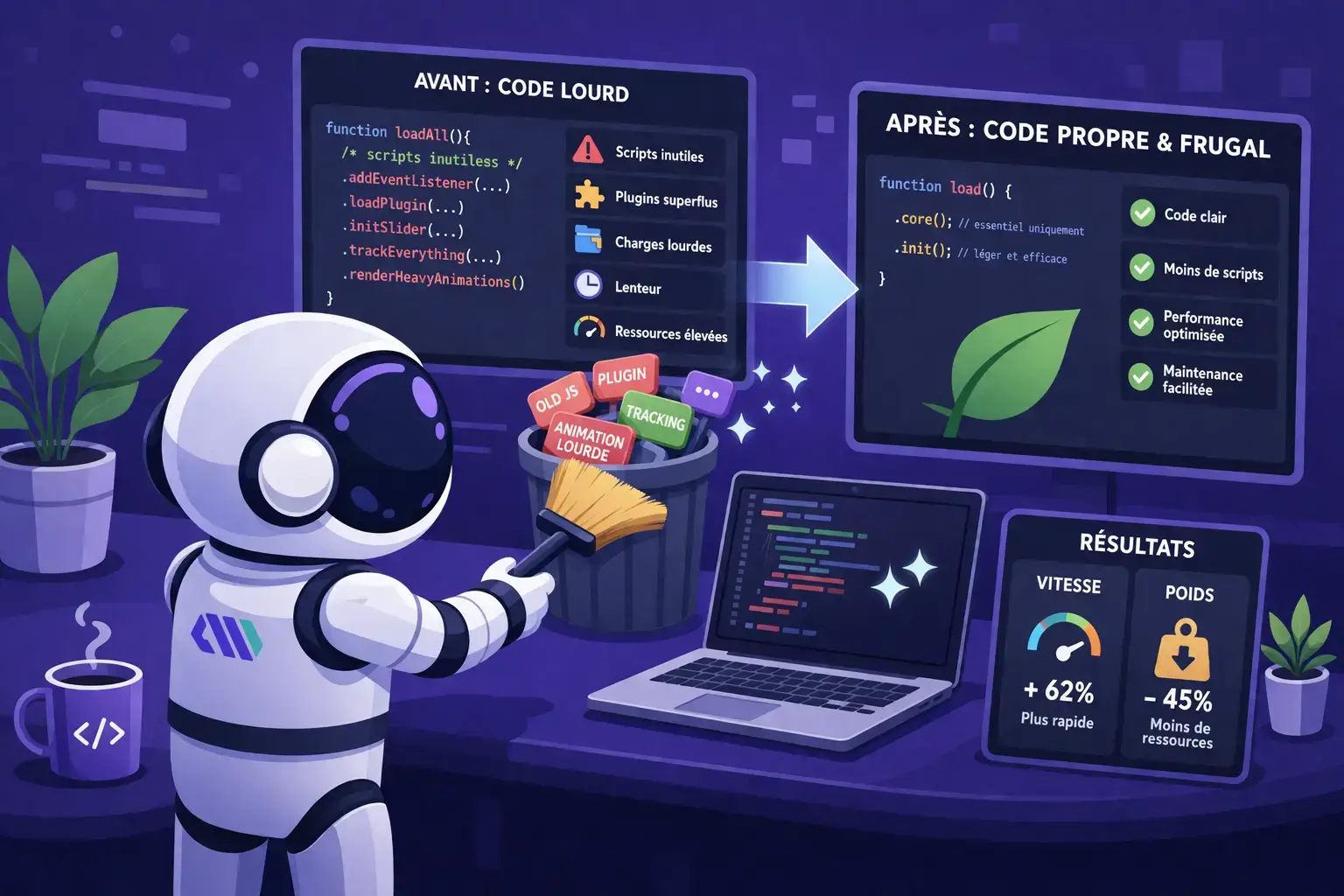
Executive leaders across the United States are recognizing that code quality is directly proportional to corporate profitability. Treating software development merely as a mechanism to deliver features without evaluating the underlying resource consumption inevitably leads to inflated operational costs. Digital frugality—the engineering practice of writing highly optimized, resource-efficient code—is a mandatory strategic posture for organizations aiming to control their Total Cost of Ownership (TCO). When engineering teams prioritize lean architecture from the initial commit, they drastically reduce the computing power required to run the application, instantly suppressing monthly cloud hosting invoices.
Conversely, ignoring code efficiency creates a hidden financial drain that compounds rapidly. Bloated software requires massive, expensive server instances just to maintain basic functionality. This inefficiency masks underlying architectural flaws and severely degrades the end-user experience. For a Chief Technology Officer, this manifests as an unpredictable IT budget and a fragile infrastructure that constantly threatens to buckle under high traffic. The accumulation of this technical debt acts as a permanent anchor on your development velocity, forcing highly paid engineers to spend their time managing server loads rather than building revenue-generating features.
At Codyweb, we engineer digital products where every algorithm and database query is scrutinized for its performance impact. We understand that a sluggish B2B portal or a lagging SaaS application directly damages your brand's credibility. By optimizing software at a microscopic level, we ensure that your digital assets consume the absolute minimum amount of server memory and processing power. This disciplined approach guarantees that your platform scales elegantly and economically, protecting your profit margins as your user base expands.
Ultimately, deploying clean, frugal code transforms your IT department from a cost center into a strategic asset. When your software operates at peak efficiency, your marketing and sales teams benefit from a lightning-fast product that actively supports high-volume lead generation. A frictionless user experience prevents prospect abandonment, shortens the sales cycle, and maximizes the Return on Investment (ROI) of your entire digital acquisition strategy.
Architectural Decisions That Dictate Long-Term Cloud Expenses
The foundational blueprint of your software dictates its future financial footprint. Attempting to optimize a poorly architected system post-launch is an expensive and often futile exercise. True digital frugality begins during the initial system design, where strategic choices regarding data flow, service isolation, and infrastructure utilization are finalized. Decision-makers must demand architectures that are inherently resilient, modular, and designed specifically to minimize continuous resource consumption.
We strongly advocate for microservices architectures when dealing with complex enterprise requirements. By decoupling a massive monolithic application into smaller, autonomous services, organizations gain the ability to scale resources with pinpoint accuracy. If your billing module experiences a sudden surge in activity at the end of the month, a microservices setup allows you to allocate additional compute power strictly to that specific function. This prevents the financial waste of duplicating the entire application simply to support one overloaded feature, resulting in massive savings on cloud expenditure.
Furthermore, integrating serverless computing for event-driven workloads pushes digital frugality to its absolute limit. In a serverless environment, your enterprise does not pay for idle server time. You are billed exclusively for the exact milliseconds your code executes. For background tasks, periodic data synchronization, or automated email triggers, this execution-based pricing model virtually eliminates wasted infrastructure spending, ensuring your capital is deployed only when actual business logic is processed.
Database design serves as another critical frontier for cost optimization. A poorly structured database schema forces the server to execute exhaustive, memory-heavy queries, slowing down the application and driving up Input/Output (I/O) costs. Our engineering teams meticulously design database structures and indexing strategies to guarantee rapid, low-resource data retrieval. By streamlining API design and enforcing strict data serialization protocols, we minimize network latency. This rigorous architectural discipline ensures your platform remains highly responsive while keeping bandwidth costs firmly under control.
Performance Optimization As A Primary Revenue Driver
In the B2B sector, application speed is a direct proxy for corporate competence. Performance optimization is not a secondary objective to be addressed during a final polish; it is a core engineering requirement that directly influences client retention and acquisition. Every fraction of a second shaved off a critical workflow or page load translates into a tangible business benefit. By writing lean code that executes rapidly, we systematically lower the amount of CPU time and memory required for each transaction, directly shrinking your AWS or Azure billing statements.
Selecting the appropriate algorithms and data structures during development prevents minor inefficiencies from scaling into major financial liabilities. A poorly written search function might perform adequately with a hundred records, but it will consume massive server resources when processing millions of rows of enterprise data. We prioritize computational efficiency, ensuring that your software handles massive datasets without requiring expensive hardware upgrades. This proactive engineering preserves your capital and ensures your software remains financially viable at scale.
For Chief Marketing Officers, application performance is the foundation of digital conversion. A blazing-fast interface keeps prospective clients engaged and eliminates the friction that causes cart abandonment or form drop-offs. When a B2B buyer is evaluating a complex SaaS tool, a responsive, immediate interface builds trust and signals technical superiority. By utilizing aggressive caching strategies to serve frequently requested data from memory rather than hitting the database, we guarantee an instantaneous user experience that directly supports aggressive marketing campaigns and maximizes conversion rates.
Distributing assets efficiently across the globe further enhances this performance. We implement robust Content Delivery Networks to ensure that heavy files, images, and static scripts are served from physical locations closest to the end-user. This reduces the load on your origin servers and guarantees a uniform, high-speed experience for your international clients. These calculated performance enhancements prove that digital frugality does not mean compromising on quality; it means delivering a superior product that actively protects your corporate budget.
Mitigating Technical Debt Through Maintainable Code Structure
Frugality extends far beyond immediate cloud hosting costs; it encompasses the long-term human capital required to maintain and evolve your software. Writing clean, highly readable, and thoroughly documented code is a mandatory investment in future productivity. When developers rely on messy, unstructured programming—often referred to as spaghetti code—they create a fragile environment where simple updates become high-risk operations. This structural chaos is the definition of technical debt, a liability that forces your company to pay continuous "interest" in the form of wasted engineering hours and delayed product releases.
We neutralize technical debt by enforcing strict modular design principles. By isolating functionality into distinct, interchangeable components, we ensure that a bug in one area of the application does not trigger a catastrophic failure across the entire system. This modularity allows different engineering squads to work on separate features concurrently without triggering merge conflicts. For the executive team, this means a significantly accelerated time-to-market for new products and critical business updates, keeping your enterprise ahead of the competition.
Rigorous automated testing is the safety net that makes rapid development possible. We embed comprehensive unit testing and integration testing into our continuous deployment pipelines. This automated scrutiny verifies that new code behaves exactly as intended and confirms that existing features remain perfectly intact. Catching defects in the staging environment rather than in production prevents expensive emergency hotfixes and protects your clients from disruptive downtime, safeguarding your brand's reputation for reliability.
Ultimately, a clean codebase is a powerful tool for talent retention. Elite software engineers despise working in degraded, frustrating legacy environments. By providing your technical team with a logical, well-maintained architecture, you foster a highly productive work environment. This reduces employee turnover, lowers recruitment costs, and ensures that your institutional knowledge remains in-house. A maintainable codebase transforms your software from a draining liability into a flexible, appreciating corporate asset.
Security And Compliance As Preventative Frugality
The most expensive line of code is the one that causes a data breach. True digital frugality demands a proactive, aggressive stance on cybersecurity. Treating security as an afterthought or an optional add-on is a reckless financial gamble. The legal penalties, forensic audit costs, and catastrophic loss of client trust associated with a compromised system will instantly obliterate any minor savings achieved by rushing the development process. We engineer security directly into the foundation of your software, protecting your capital and your reputation.
Our development protocols strictly adhere to modern secure coding standards. We implement rigorous input validation to block malicious code injection, deploy sophisticated output encoding, and enforce military-grade authentication mechanisms. By encrypting sensitive corporate data both at rest in your databases and in transit across networks, we neutralize the threat of unauthorized interception. These fundamental engineering practices ensure that your proprietary algorithms and your clients' private information remain completely secure against sophisticated cyber threats.
For enterprises operating in heavily regulated industries, compliance is a non-negotiable business requirement. Attempting to retrofit a completed application to meet strict frameworks like HIPAA, SOC 2, or PCI DSS is an agonizingly slow and astronomically expensive process. We eliminate this financial risk by incorporating these specific regulatory requirements into our initial architectural planning. By building compliant data flows and audit trails from day one, we guarantee that your software passes vendor assessments smoothly and accelerates enterprise procurement cycles.
This proactive defense strategy ultimately acts as a powerful commercial differentiator. Enterprise buyers are increasingly paranoid about supply chain vulnerabilities. When your sales team can prove that your custom software was engineered with uncompromising security and baked-in compliance, you instantly alleviate buyer anxiety. This verifiable commitment to data protection shortens contract negotiations, wins competitive bids, and firmly establishes your organization as a highly trustworthy B2B vendor.
Executing A Strategy Of Continuous Digital Optimization
Digital frugality is not a static destination achieved at the project launch; it is a relentless, ongoing discipline. Enterprise software exists in a highly dynamic environment, constantly adapting to shifting user behaviors, expanding datasets, and evolving business objectives. To guarantee that your application remains highly efficient over a multi-year lifespan, executive leadership must cultivate a culture of continuous monitoring and iterative refinement. Failing to monitor performance post-launch guarantees that your infrastructure will eventually succumb to costly resource bloat.
We deploy sophisticated application performance monitoring tools that provide absolute visibility into your software's operational health. These dashboards track database query times, memory utilization, and server response latency in real-time. By analyzing this hard data, our engineers can instantly identify specific functions that are consuming excessive compute power. This analytical approach allows us to execute surgical code refactoring, fixing minor inefficiencies before they scale into massive cloud billing spikes.
Automation is the engine that drives this continuous improvement. By leveraging advanced DevOps methodologies, we automate your testing, infrastructure provisioning, and deployment pipelines. This removes the risk of human error associated with manual server configuration and ensures that optimized code reaches production rapidly and safely. An automated environment allows your engineering team to deploy dozens of minor, highly efficient updates every week, constantly refining the application's performance without causing operational disruption.
Do not allow bloated, inefficient software to drain your operating capital or stifle your corporate agility. A commitment to clean code and lean architecture guarantees that your technology investments generate maximum business value. By prioritizing digital frugality, you systematically lower your operating expenses, accelerate your product delivery, and deploy a blazing-fast digital platform that actively drives enterprise growth.
- vote(s)