
Understanding the "Why": Connecting Tech Projects to Business Outcomes
Before any lines of code are written or design mockups initiated, a decision-maker must articulate the fundamental business problem or opportunity a technology project addresses. An RFP is not merely a shopping list of features; it's a strategic document that outlines how a proposed solution will impact the organization's bottom line. Failure to establish this clear connection early on often leads to projects that miss their mark, exceed budgets, and deliver minimal value.
Start by identifying the core business objectives. Is the goal to increase lead generation by 20% in the next fiscal year? Is it to reduce operational costs by automating a manual process, thereby improving ROI on labor? Perhaps it's to accelerate time-to-market for a new product line, gaining a competitive advantage. These high-level objectives must translate into measurable key performance indicators (KPIs) that the project intends to influence. For instance, if the project is a new e-commerce platform, KPIs might include conversion rates, average order value, or customer acquisition cost. Defining these metrics upfront ensures that both your team and potential agency partners understand the ultimate definition of success, moving beyond subjective aesthetics or feature counts.
Decision-makers must also consider the current state and the desired future state, outlining the gap the technology solution is meant to bridge. This involves an honest assessment of existing pain points, inefficiencies, and untapped opportunities. Without this clarity, agencies are left to guess at underlying motivations, often proposing solutions that are technically sound but strategically misaligned. A well-defined "why" provides the necessary context for an agency to propose innovative, effective solutions that genuinely contribute to your organization's growth and efficiency, directly influencing positive ROI.
Defining Scope and Preventing Scope Creep
The scope of a technology project is its boundary, outlining what is included and, equally important, what is explicitly excluded. An ill-defined scope is a primary driver of project delays, budget overruns, and overall dissatisfaction. Decision-makers must invest significant time in detailing the functional and non-functional requirements of the desired solution. This involves breaking down the project into manageable components and articulating specific user stories or use cases.
When drafting your RFP, differentiate between "must-have" features, which are critical for the solution to achieve its core objectives, and "nice-to-have" features, which add value but are not essential for the initial launch. Prioritizing features not only helps agencies understand your core needs but also enables them to propose phased development approaches, such as a Minimum Viable Product (MVP). An MVP strategy allows for a quicker time-to-market, validation of key assumptions, and incremental feature additions based on real-world user feedback, thereby managing upfront investment and risk.
Scope creep, the gradual expansion of project requirements beyond its original boundaries, is a persistent threat. To mitigate this, the RFP should clearly state how scope changes will be managed post-contract, including processes for review, approval, and cost adjustments. Detail any integrations with existing systems, data migration requirements, and performance expectations. For instance, specifying expected user load, response times, or uptime guarantees provides agencies with crucial context for architectural decisions. Comprehensive scope definition ensures that agency proposals are directly comparable and that the chosen partner fully understands the project's parameters, safeguarding your budget and timeline from unforeseen expansions and their impact on Total Cost of Ownership (TCO).
Budgeting Realistically and Understanding Total Cost of Ownership (TCO)
Financial transparency and realistic budgeting are paramount when engaging with an agency. Many decision-makers focus solely on the initial development cost, neglecting a broader understanding of the Total Cost of Ownership (TCO). TCO extends beyond the agency's development fee to include licensing, hosting, ongoing maintenance, support, future upgrades, and potential internal resource allocation for content management or administrative tasks. These often hidden costs can significantly inflate the true expense of a technology solution over its lifespan.
While providing a precise budget figure in an RFP is often debated, offering a realistic budget range signals to agencies your financial parameters. This allows them to tailor proposals that fit within your financial constraints, potentially suggesting different technological stacks or phased approaches if your budget is limited. Requesting detailed cost breakdowns from agencies is essential. Look for transparency in their pricing model: are they quoting fixed-price, time & materials, or a hybrid? Understand what deliverables are associated with each cost component.
When evaluating proposals, scrutinize line items for hidden fees or excluded services. For example, does the proposal include third-party software licenses, stock photography, specialized integrations, or post-launch warranty and support? Will there be ongoing costs for cloud infrastructure, content delivery networks, or security audits? A thorough understanding of TCO allows you to make an informed decision, comparing not just the upfront investment but the long-term financial implications of each proposal. This foresight directly impacts the project's overall ROI by ensuring that the initial investment is sustainable and accounts for the full lifecycle of the product or service.
Evaluating Agency Capabilities and Methodologies
Selecting the right agency goes beyond reviewing a polished portfolio. Decision-makers need to assess an agency's true capabilities, project management methodologies, and cultural fit. The RFP should ask for specifics that reveal an agency's operational strengths and how they align with your organization's needs.
Request information on the agency's relevant experience, asking for case studies that demonstrate success with similar project types, industries, or technical challenges. Crucially, ask for details on the specific team members who would be assigned to your project, including their roles, experience, and certifications. Understanding the team structure and the involvement of senior personnel is vital; often, RFPs are won by impressive pitch teams who are then replaced by less experienced individuals once the contract is signed. Demand clarity on who will be your primary point of contact and their role in project leadership.
Inquire about their project management methodology. Do they operate using Agile (Scrum, Kanban) or a more traditional Waterfall approach? How do they handle requirements gathering, design iterations, testing, and deployment? A modern approach, often Agile, can offer greater flexibility, transparency, and faster iteration cycles, which can significantly improve time-to-market and allow for adjustments based on early feedback. For Agile projects, clarify how they manage sprints, backlog grooming, and stakeholder involvement. Also, ask about their approach to quality assurance, testing protocols, and post-launch support and maintenance. An agency’s ability to communicate effectively, manage expectations, and adapt to evolving needs is as important as their technical prowess, directly affecting project efficiency and ultimate ROI.
Crafting the RFP Document: Key Sections and Best Practices
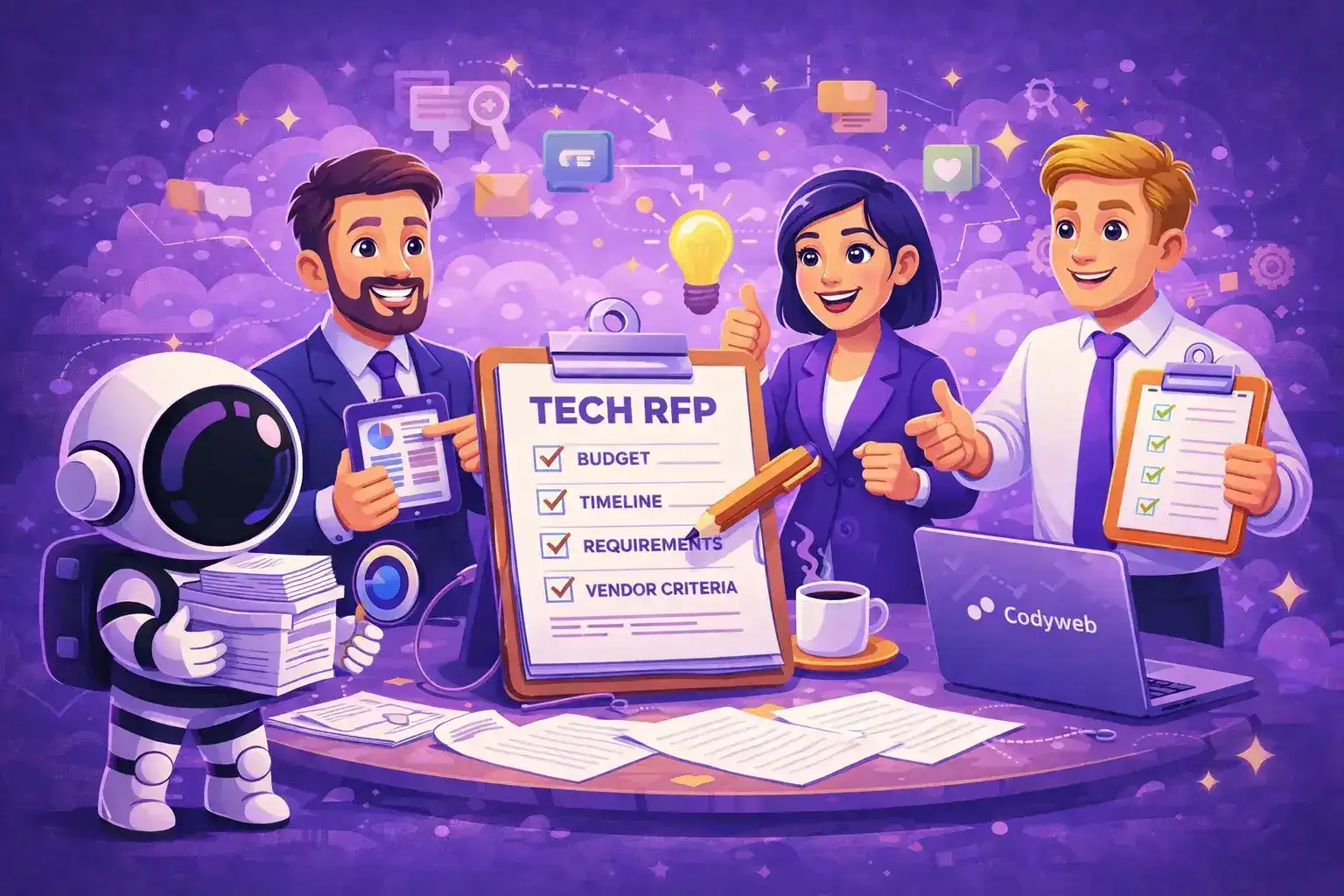
An effective RFP is a structured document that guides potential agencies through your requirements, ensuring they have all necessary information to submit a comprehensive and relevant proposal. While specific content will vary, a robust RFP generally includes several key sections:
Executive Summary
A brief overview of the project, its purpose, and the desired outcome. This provides agencies with an immediate understanding of the opportunity.
Company Background
Information about your organization, its mission, market position, and relevant existing technology stack. This context helps agencies understand your environment and potential integration challenges.
Project Goals and Objectives
As discussed, clearly state the business problems you are solving and the measurable ROI, lead generation, or time-to-market impacts you expect. Define success metrics.
Scope of Work and Requirements
Detailed functional and non-functional requirements, user stories, technical specifications, integration points, and any specific technologies to be used or avoided. Prioritize features (must-have vs. nice-to-have).
Technical Requirements
Existing infrastructure, preferred platforms, APIs, security requirements, scalability needs, and data migration plans. This is where you outline critical dependencies and constraints.
Deliverables
A clear list of all expected outputs, including documentation, code repositories, design files, training materials, and ownership of intellectual property.
Timeline and Milestones
Your desired project start date, key milestones, and target completion date. Be realistic, but provide a framework.
Budget Considerations
As mentioned, a realistic budget range or clear expectations for cost breakdown and TCO.
Submission Requirements and Process
Instructions on proposal format, required content (e.g., team resumes, references, case studies, proposed methodology), submission deadline, and contact person for questions. Include a clear process for Q&A sessions.
Evaluation Criteria
Explicitly state how proposals will be judged (e.g., experience, proposed solution quality, team expertise, cost, methodology alignment). This transparency helps agencies focus their efforts and ensures you receive comparable proposals.
Balancing detail with flexibility is crucial. Provide enough information for agencies to understand the project comprehensively, but allow room for them to propose innovative solutions you may not have considered. Avoid overly prescriptive technical solutions if you are open to alternative approaches. A well-crafted RFP minimizes ambiguity, streamlines the evaluation process, and sets the foundation for a productive agency partnership.
Post-RFP Engagement: From Selection to Kick-off
The RFP submission is just one step in the vendor selection process. What happens next is equally critical for securing the right partner and setting the project up for success. Decision-makers must have a clear strategy for evaluating proposals and engaging with shortlisted agencies.
After the submission deadline, conduct a thorough internal review of all proposals against your stated evaluation criteria. Create a scoring matrix to ensure objectivity and direct comparisons. Focus not just on the technical solution but also on the agency's understanding of your business goals, their proposed methodology, and their cultural fit. Shortlist 2-4 agencies for deeper engagement. This typically involves presentation meetings where agencies can elaborate on their proposals, demonstrate prototypes (if applicable), and answer specific questions. These sessions are also an opportunity to assess team dynamics and communication styles firsthand.
During this phase, expect an open dialogue. Agencies will likely have follow-up questions to refine their understanding or clarify requirements. Be prepared to provide additional information without inadvertently expanding the project scope. Once a preferred agency is identified, initiate contract negotiations. Pay close attention to intellectual property rights, payment schedules, service level agreements (SLAs), data security protocols, and termination clauses. Legal review is non-negotiable.
Finally, a successful project kick-off lays the groundwork for efficient collaboration. This meeting should bring together key stakeholders from both your organization and the agency. Reiterate project goals, review the finalized scope, define communication protocols, and establish clear roles and responsibilities. A well-managed post-RFP process ensures a smooth transition into the project's execution phase, minimizing early friction and setting a collaborative tone. This meticulous approach from RFP drafting to kick-off ensures that your technology investment yields tangible ROI, improves lead generation, and achieves desired time-to-market objectives while managing TCO effectively.
- vote(s)