
The Strategic Imperative of Tech Partnerships for Enterprise Growth
For US decision-makers—whether a CTO evaluating infrastructure, a CMO driving acquisition, or a founder managing burn rate—technology investments have permanently shifted from operational overhead to core strategic assets. Executive leadership faces intense pressure to demonstrate a highly predictable Return on Investment (ROI) for every software initiative. The primary business challenge is no longer simply acquiring functional software; it is architecting an interconnected digital environment that scales efficiently without hemorrhaging capital or introducing unforeseen liabilities. Attempting to navigate this complex environment with a vendor-client mindset frequently leads to bloated budgets and misaligned objectives. True enterprise growth requires a dedicated technology partnership, transforming isolated software deployments into a unified, value-generating engine.
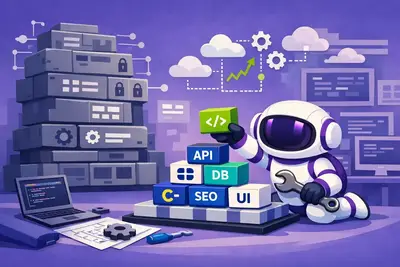
Relying on a fragmented collection of off-the-shelf software inevitably creates data silos and severe operational drag. When departments utilize disconnected platforms, information requires manual routing, error rates spike, and cross-functional visibility disappears. This disjointed approach inherently restricts your ability to scale. A custom-engineered tech ecosystem directly solves this by establishing a framework where proprietary web applications, databases, and third-party integrations communicate natively. This architectural alignment prevents the structural bottlenecks that plague growing organizations, ensuring that your digital foundation actively supports your revenue targets rather than acting as a constant barrier to execution.
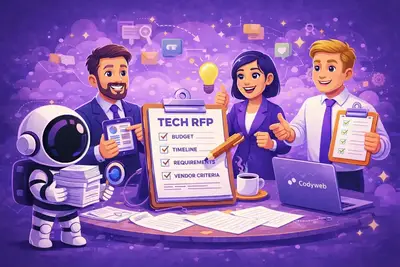
Partnering with a specialized development firm shifts the focus from writing code to solving complex business problems. A strategic partner audits your existing workflows, identifies the specific points of friction, and designs custom web applications that align precisely with your market objectives. Consider a scaling B2B startup wasting tens of thousands of dollars annually on overlapping SaaS subscriptions that refuse to share data accurately. By transitioning to a consolidated, custom-built internal platform managed by a dedicated tech partner, the startup eliminates redundant licensing fees, automates data transfer, and regains complete control over its intellectual property. This level of strategic alignment ensures that your capital is deployed strictly toward initiatives that generate measurable business value.
Eradicating Hidden Costs to Optimize Total Cost of Ownership
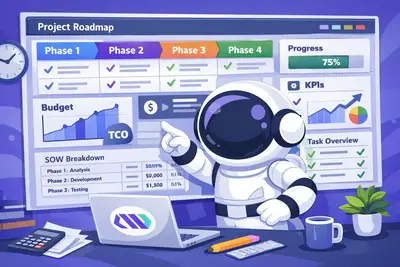
The initial sticker price of standalone commercial software is notoriously deceptive. For enterprise applications, the upfront licensing fee represents a fraction of the actual financial burden. The hidden costs of continuous maintenance, forced upgrade cycles, and specialized engineering required to force incompatible systems into communication rapidly inflate your Total Cost of Ownership (TCO). An optimized, custom-built tech ecosystem systematically eradicates these hidden expenses by prioritizing structural interoperability from the very first line of code. When your CRM, ERP, and custom operational portals are designed to share a unified data architecture, you eliminate the need for expensive, brittle middleware.
The mechanics of this cost reduction are highly pragmatic. In a fractured software environment, IT departments spend a disproportionate amount of their budget on custom API development just to keep basic data flowing between departments. These ad-hoc integrations frequently break during routine vendor updates, resulting in costly downtime and emergency engineering intervention. A strategic custom build standardizes these data pathways. By designing centralized databases and robust internal APIs, your development partner ensures that data moves securely and instantly across the organization. This architectural discipline drastically reduces the reliance on external integration specialists and minimizes the expensive system failures caused by manual data transcription errors.
Furthermore, an integrated technology partnership consolidates your support and maintenance overhead. Managing troubleshooting tickets across ten different software vendors is an administrative nightmare that drains internal IT resources. A strategic development partner provides a single, unified point of accountability for your entire core web infrastructure. Instead of navigating conflicting vendor support tiers during a critical outage, your team relies on the engineers who architected the system. This drastically compresses issue resolution times and allows your internal staff to focus exclusively on strategic, revenue-driving initiatives rather than perpetual operational firefighting. The resulting reduction in wasted labor hours directly improves bottom-line profitability.
Accelerating Time-to-Market With a Unified Digital Foundation
Speed is a decisive competitive advantage in the B2B sector. The ability to deploy new features, launch digital marketing campaigns, and roll out customer-facing portals faster than industry rivals directly impacts market share. A disjointed, legacy technology stack is the primary antagonist to this required agility. When product teams must completely re-engineer backend logic to accommodate a simple new feature, or when marketing teams spend weeks aggregating data for a campaign launch, your time-to-market grinds to a halt. A custom, integrated tech ecosystem is engineered specifically to function as an accelerator for rapid deployment and corporate innovation.
This acceleration is achieved through modular architecture and standardized development protocols. A strategic development partner builds your custom web applications using reusable components and highly documented codebases. Instead of reinventing core functionalities for every new project, your engineering teams build upon a stable, pre-tested foundation. This methodology facilitates rapid prototyping and significantly shorter development sprints. If your enterprise identifies an emerging market demand, a modular architecture allows developers to quickly spin up a new service module, integrate it with existing billing and user authentication systems, and deploy it to production securely and swiftly.
This operational agility extends directly to marketing and sales execution. When customer behavioral data flows instantaneously from a custom web portal into your marketing automation suite, CMOs can execute highly targeted campaigns without relying on IT for manual data pulls. Consider an enterprise rolling out a new partner portal; because the custom backend was integrated directly with their existing CRM during the development phase, the marketing team was able to trigger automated onboarding sequences the moment the portal went live. By removing technical friction, a unified digital foundation ensures that your most innovative ideas reach your target audience rapidly, protecting the return on your development investments and capturing early-market revenue.
Engineering Your Tech Stack for High-Velocity Lead Generation
Ultimately, executive leadership judges technology investments by their capacity to drive measurable corporate growth. A robust, custom-engineered platform is specifically designed to enhance your lead generation mechanics and accelerate the sales cycle. When marketing and sales technologies operate in silos, high-value prospects inevitably fall through the cracks. Inaccurate lead scoring, delayed follow-ups, and fragmented customer histories directly sabotage conversion rates. A strategically built ecosystem completely aligns these departments, providing a unified, real-time view of the entire prospect journey.
The core engine of high-velocity sales is absolute data integrity. A custom web application ensures that data captured from inbound forms, client interactions, and platform usage is immediately sanitized and routed to the correct sales representative with rich, contextual history. This enables sales teams to abandon generic pitches and execute highly personalized outreach based on exact user behavior. When a prospect interacts with a specific tool within your custom application, that engagement is logged and analyzed, allowing your sales force to strike precisely when buyer intent is highest. This level of automated precision significantly reduces the customer acquisition cost and shortens the time required to close complex B2B deals.
Additionally, a unified custom ecosystem empowers founders and marketing directors with uncompromised, closed-loop analytics. You gain the ability to track a prospect from their first anonymous website visit, through the lead nurturing process, all the way to a closed-won contract. This granular visibility allows decision-makers to calculate exact Customer Lifetime Value (CLV) and mathematically determine which specific marketing channels and product features generate the highest quality pipeline. By engineering your tech stack to automate lead qualification and deliver pristine performance data, the platform ceases to be a mere operational tool and becomes a primary driver of sustained, predictable revenue.
Mitigating Security Risks and Ensuring Regulatory Compliance
Protecting corporate data and ensuring system stability are absolute requirements for any modern enterprise. A highly fragmented technology stack is inherently vulnerable; every disjointed third-party plugin and poorly maintained API connection represents a potential attack vector for malicious actors. A single data breach can trigger catastrophic financial penalties and irreparably damage a brand's reputation. A custom tech ecosystem, developed by a strategic partner, mitigates these severe risks by embedding advanced security protocols deeply into the foundational architecture.
Consolidating critical business processes within a unified custom framework drastically reduces your organization's digital attack surface. Your development partner can implement standardized, enterprise-grade encryption, rigorous access controls, and multi-factor authentication uniformly across the entire application. Rather than hoping that a dozen different SaaS vendors maintain adequate security postures, you maintain absolute control over your defensive infrastructure. Routine vulnerability scanning and automated patching can be centrally managed, ensuring that your core applications remain hardened against evolving cyber threats without requiring constant manual oversight from internal teams.
Furthermore, navigating complex compliance frameworks is incredibly difficult when utilizing generalized software. For enterprises handling sensitive health, financial, or consumer data, adhering strictly to HIPAA, SOC 2, or CCPA regulations is a legal mandate. A custom web application solves this by building data governance and compliance tracking directly into the business logic. Automated data retention policies, granular role-based permissions, and immutable audit logs are engineered to your exact industry requirements from day one. This proactive approach to security and compliance protects the enterprise from crippling audits and fines, ensuring that your digital infrastructure is a fortress rather than a liability.
Securing Your Digital Future Through Strategic Vendor Alignment
The decision to overhaul your digital infrastructure is a profound commitment to the future resilience of your organization. Choosing to build a custom tech ecosystem is not merely a software procurement exercise; it is the establishment of a strategic partnership designed to protect capital and fuel long-term expansion. For CTOs, CMOs, and founders, continuing to tolerate the inefficiencies, security vulnerabilities, and data silos of disjointed commercial software is a direct threat to competitive viability. Sustainable growth requires a platform that bends to your exact business rules, rather than forcing your operations to conform to a generic template.
A true technology partner focuses on aggressive scalability and future-proofing. As your enterprise acquires new customers, enters new global markets, or launches advanced product lines, your custom cloud-native architecture expands elastically to meet the demand. You avoid the catastrophic downtime and massive financial drain of ripping and replacing software every three years. Your digital infrastructure becomes a dynamic, evolving asset that continuously supports increased transaction volumes and complex new workflows seamlessly.
Ultimately, strategic vendor alignment empowers your executive team to focus entirely on market dominance and innovation. By entrusting the architecture, security, and integration of your digital ecosystem to a specialized custom development partner, you guarantee absolute operational predictability. You secure a platform that structurally lowers costs, accelerates revenue generation, and provides the unshakeable digital foundation required to execute your most ambitious corporate objectives.
- vote(s)