
Performance and Scalability: Beyond the Brochure Specs
Many US enterprise decision-makers are initially drawn to Content Management Systems (CMS) by vendor promises of rapid deployment and ease of use. However, these perceived benefits frequently conceal severe operational trade-offs, particularly when evaluated against the stringent demands of a high-traffic corporate environment. A typical CMS is engineered as a mass-market, general-purpose tool. By its very nature, it carries a massive volume of unused code, redundant features, and heavy database queries designed to cater to everyone from independent bloggers to mid-sized retailers. This inherent structural bloat becomes an immediate bottleneck when subjected to heavy enterprise load.
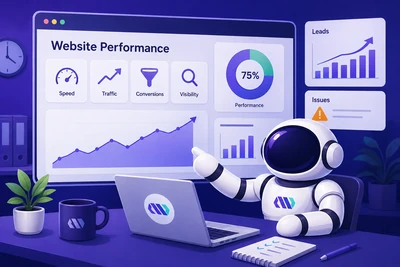
Imagine a global B2B procurement platform processing thousands of complex transactions simultaneously, or a highly secure customer portal serving a vast, concurrent user base. Under these conditions, a standard CMS struggles to maintain optimal latency and swift response times. The system must process layers of unnecessary logic before rendering a single page, directly degrading the user experience (UX). Modern corporate buyers expect instant gratification and frictionless interactions; sluggish load times directly cause frustration, inflate bounce rates, and actively destroy opportunities for high-value lead generation and conversion.
Furthermore, search engine algorithms now heavily penalize slow, unoptimized websites. A bloated CMS actively harms your organic visibility, whereas a high-performing digital platform serves as a direct, powerful contributor to your SEO rankings. Custom native code, conversely, is engineered from the ground up to execute your exact business requirements. Every line of code, every database call, and every specific architectural decision is calibrated around your proprietary business logic and your anticipated traffic patterns. This absolute precision allows for unparalleled speed and operational efficiency.
By partnering with a specialized engineering team, enterprises can fine-tune server configurations and application logic to achieve sub-second load times during maximum peak demand, entirely bypassing the overhead of unnecessary features. This approach guarantees that your digital platform scales effortlessly. Whether your technical strategy requires horizontal expansion by adding more cloud servers, or vertical upgrades to existing infrastructure, custom architecture avoids the fatal plugin conflicts that routinely crash modular CMS setups. Your application transforms from a restrictive system into a high-velocity asset that actively accelerates corporate growth.
Security and Data Integrity: Protecting Enterprise Assets
In the modern digital economy, enterprise cybersecurity is a paramount commercial concern that directly impacts company valuation. A single data breach can devastate brand trust, trigger severe regulatory fines, and compromise highly sensitive client information, leading to irreparable financial damage. While reputable CMS platforms issue regular security patches, their massive global popularity and heavily modular nature make them the primary targets for automated cyberattacks. Relying on a mass-market platform means your business shares the exact same vulnerabilities as millions of other websites.
A standard CMS ecosystem is built upon a vast, generalized codebase and augmented by numerous third-party plugins, themes, and extensions. Each external add-on introduces untested, potential vulnerabilities into your corporate environment. Maintaining constant vigilance over the security posture of dozens of disparate plugins, coordinating timely updates, and frantically patching exploits across a fragmented system is a highly resource-intensive and dangerously reactive battle. The larger this digital attack surface grows, the greater your inherent operational risk becomes.
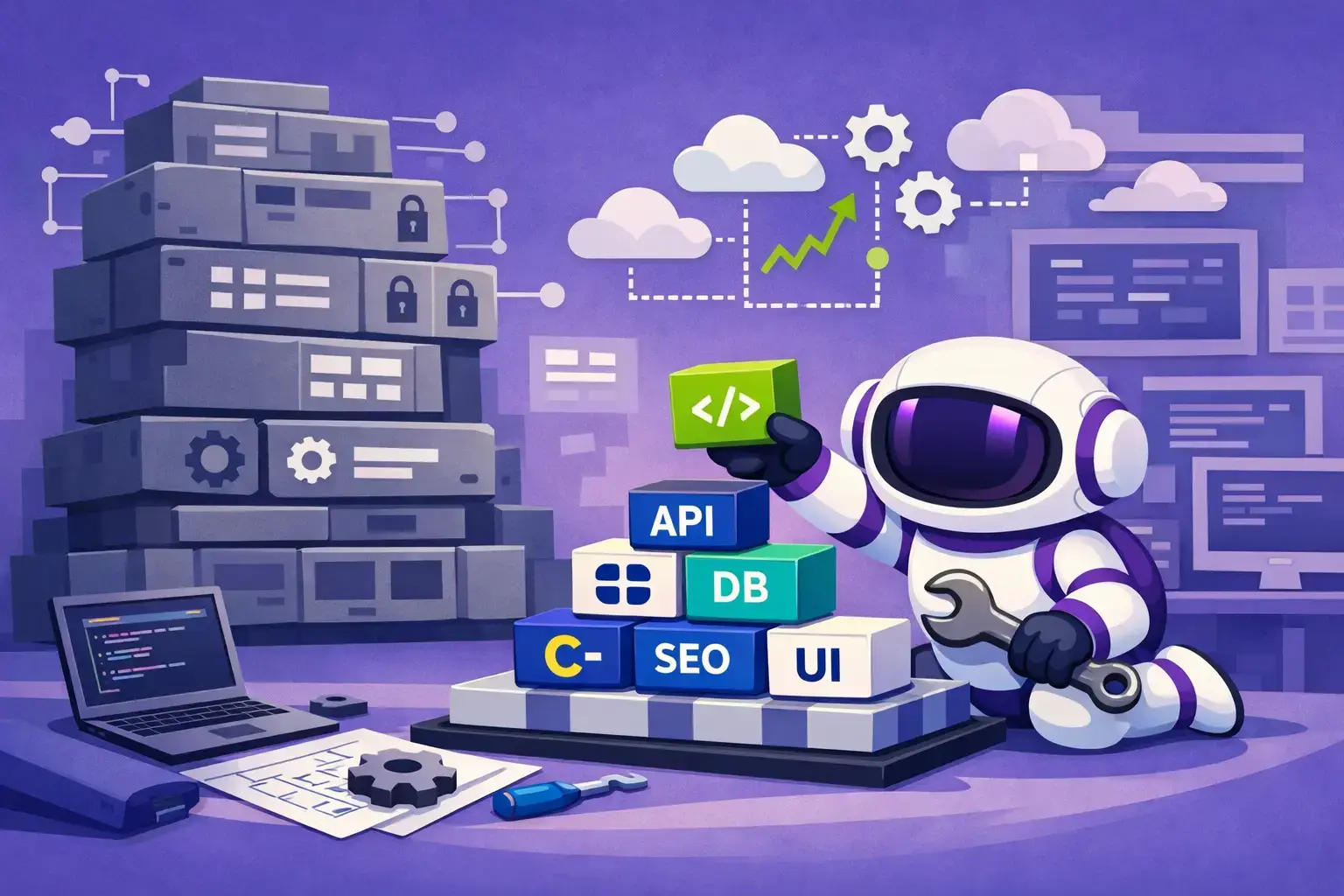
Custom native code establishes a fundamentally different, proactive security posture. By engineering the platform from scratch, developers permanently eliminate the extraneous code and unused features that serve as the most common attack vectors. The security architecture is custom-designed and rigidly implemented specifically to defend your application’s unique threat profile. This empowers your IT leadership to enforce tailored access control protocols, implement military-grade data encryption, and construct secure, private API gateways for critical business systems.
This focused engineering approach allows organizations to embed strict industry compliance directly into the core business logic. For US enterprises managing sensitive information, passing rigorous audits for HIPAA health data compliance or meeting strict CCPA consumer privacy standards is significantly more reliable when the entire system is built with these regulations as foundational requirements. Attempting to force a generic CMS to pass an enterprise security audit often requires expensive, brittle workarounds. A proactive, native security stance safeguards your proprietary assets, protects your market reputation, and guarantees the uninterrupted trust of your clients.
Total Cost of Ownership (TCO): The Hidden Financial Drain of CMS
The initial commercial allure of a CMS relies heavily on an illusion of lower upfront costs and accelerated deployment schedules. However, for complex enterprise-level applications, these superficial savings evaporate rapidly, quickly forcing the organization to absorb a significantly higher Total Cost of Ownership (TCO). Off-the-shelf platforms are notorious for introducing compounding, ongoing expenses that remain hidden during the initial procurement phase. These financial liabilities steadily drain your operating capital and restrict your capacity to fund genuine innovation.
The recurring financial burden includes escalating licensing fees for enterprise-tier core systems, expensive monthly subscriptions for premium plugins, and the costly requirement to retain highly specialized, niche developers just to keep the fragile ecosystem running. As your business scales and your operational workflows evolve, your enterprise will inevitably hit the functional limits of the generic software. Consequently, you will pay exorbitant consulting fees to develop clumsy workarounds, attempting to force the CMS to execute tasks it was never engineered to handle.
Additionally, building your digital presence upon third-party plugins traps your organization in a state of severe vendor lock-in. You become entirely dependent on external developers to update their code. When a critical plugin is abandoned by its creator, your enterprise loses essential functionality overnight. Furthermore, the mandatory CMS upgrade cycles routinely introduce breaking changes and database incompatibilities, forcing your internal IT team to spend weeks resolving conflicts rather than building new, revenue-generating features.
With custom native code, the initial capital expenditure is a direct investment into a proprietary corporate asset that your business owns outright. It permanently eliminates recurring third-party licensing fees and destroys the need for expensive, patched-together workarounds. Maintenance becomes highly predictable and is focused exclusively on your specific, streamlined codebase. Over a multi-year horizon, the absence of vendor fees, the massive reduction in troubleshooting hours, and the superior performance capabilities mathematically guarantee a substantially lower TCO and a definitively higher Return on Investment (ROI).
Innovation and Differentiation: Building a Unique Competitive Edge
In highly saturated, aggressive B2B markets, technological differentiation is the primary mechanism for capturing buyer attention, sustaining engagement, and accelerating high-value conversion rates. A generic website or application constructed on a template-driven CMS inherently offers zero scope for true digital innovation. If you build your corporate platform using the exact same software foundation as your competitors, your user experience will inevitably look and function exactly like theirs.
Your ability to deploy highly personalized user journeys, engineer proprietary data visualization tools, or integrate flawlessly with internal legacy systems is strictly capped by the rigid, predefined architecture of the CMS. You are effectively restricted to building your business within someone else's structural sandbox. This forces your sales and marketing departments to compromise on their digital strategies, relying on whatever functionality happens to be available in the public plugin marketplace rather than executing a dominant, custom-tailored market offensive.
Custom native code completely liberates the enterprise from these artificial constraints. It provides your engineering and product teams with a blank canvas to bring your most ambitious commercial strategies to life. If your organization requires a bespoke, highly complex integration with an existing ERP or CRM to automate specific supply chain workflows, custom development makes it possible. If your CMO demands a proprietary recommendation engine to dramatically improve marketing automation and cross-selling, native code delivers it without compromise.
This uncompromising level of customization allows enterprises to engineer incredibly sticky, high-performance digital experiences that cement customer loyalty and forge a definitive competitive edge. Because you own the codebase, you drastically reduce the time-to-market for deploying market-leading features; you never have to wait for a third-party vendor to release a feature update. This structural agility allows your company to pivot instantly, capturing new revenue streams and setting the operational standard for your entire industry.
The Strategic Imperative: Aligning Technology With Corporate Goals
For executive leadership teams, technology procurement can no longer be viewed as a basic administrative support function; it must be treated as a primary strategic enabler that aggressively propels the company's financial objectives forward. Selecting a foundational digital platform based solely on perceived initial convenience, without rigorously modeling its long-term operational implications, is a dangerous decision. A restrictive technology stack actively stifles corporate growth, paralyzes internal innovation, and destroys organizational agility.
The fundamental flaw of relying on a generalized CMS for complex enterprise operations is the severe mechanical misalignment between mass-market software and your highly specific, proprietary business logic. Attempting to run a massive corporate infrastructure on a blogging platform is comparable to installing a high-performance racing engine into a commercial delivery truck. The maximum potential of the engine is heavily restricted by the chassis, and the resulting performance is universally compromised, leading to massive inefficiencies.
Committing to custom native code is a strategic executive mandate because it guarantees that your digital infrastructure is perfectly aligned with your aggressive revenue targets. It secures absolute control and total data ownership over your entire technology stack. This architectural independence future-proofs your capital investments, empowering your enterprise to adapt instantly to shifting buyer demands without ever relying on the unpredictable product roadmaps of external software vendors.
This approach establishes the structural flexibility required to unify your disparate digital tools into a single, high-performance ecosystem. The resulting alignment streamlines internal operations, eradicates manual data entry, and maximizes data visibility across every department. The combination of elite performance, hardened security, a slashed TCO, and the unhindered capacity to innovate delivers a highly predictable, massive ROI. Ultimately, custom native code ensures your digital platform actively drives your market expansion, providing the unyielding business agility required to secure long-term commercial dominance.
- vote(s)