
Key takeaways
- A tech RFP starts with the business outcome and its measurable KPIs, not with a list of features.
- Separating must-have from nice-to-have features and describing the change process keeps scope creep under control.
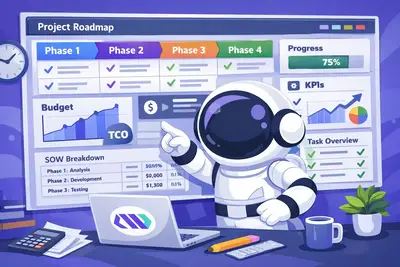
- Asking for a budget range, a cost breakdown and the total cost of ownership makes proposals comparable.
Understanding the "why": connecting tech projects to business outcomes
Before any line of code is written or any mockup is drawn, a decision-maker must articulate the business problem or opportunity that the technology project addresses. A request for proposal is not a shopping list of features: it is a strategic document explaining how the expected solution will affect the organization's results. When this connection is not established early, projects tend to miss their target, exceed their budget and deliver little value.
Start by identifying the core business objectives. Is the goal to increase lead generation by a defined percentage over the next fiscal year, for instance 20%? To reduce operating costs by automating a manual process, and thus improve the return on investment (ROI) of the labor involved? Or to shorten the time-to-market of a new product line? These objectives must translate into key performance indicators (KPIs) that the project is expected to influence. For a new e-commerce platform, they might include conversion rate, average order value or customer acquisition cost. Defining these metrics upfront gives your team and the agencies a shared definition of success, beyond aesthetics or feature counts. If the project is a website that attracts visitors without converting them, first identify why a website is not getting leads, so that the RFP targets the real causes.
Decision-makers should also describe the current situation and the desired future state, so that the gap the solution must bridge is explicit. This requires an honest assessment of existing pain points, inefficiencies and untapped opportunities. Without this clarity, agencies must guess at the underlying motivations and often propose solutions that are technically sound but strategically misaligned. A well-defined "why" gives them the context needed to propose effective solutions, including the build-or-buy question that our comparison of custom software and off-the-shelf SaaS helps you frame.
Defining scope and preventing scope creep
The scope of a technology project is its boundary: it states what is included and, just as importantly, what is explicitly excluded. An ill-defined scope is a primary cause of delays, budget overruns and dissatisfaction. Decision-makers must therefore take the time to detail the functional and non-functional requirements of the solution, break the project into manageable components and describe specific user stories or use cases.
When drafting your RFP, distinguish must-have features, which the solution needs to reach its core objectives, from nice-to-have features, which add value but are not required for the first launch. This prioritization helps agencies understand your core needs and allows them to propose phased approaches such as a minimum viable product (MVP). An MVP shortens time-to-market, validates key assumptions and adds features gradually based on user feedback, which limits both the upfront investment and the risk.
Scope creep, the gradual expansion of requirements beyond their original boundaries, is a constant threat. To contain it, the RFP should state how scope changes will be handled after signature, including the review, approval and cost adjustment process. It should also list the integrations with existing systems, the data migration requirements and the performance expectations. Specifying expected user load, response times or availability targets gives agencies the context they need for architecture decisions, and integration points are easier to describe when your systems follow an API-first architecture.
Budgeting realistically and understanding total cost of ownership (TCO)
Financial transparency and realistic budgeting are decisive when you engage an agency. Many decision-makers focus solely on the initial development fee and overlook the total cost of ownership (TCO), which also includes licenses, hosting, maintenance, support, future upgrades and the internal time needed for content management or administration. These less visible costs can significantly increase the real expense of a solution over its lifespan.
Whether to state a precise budget in an RFP is often debated, but a realistic budget range signals your financial parameters to agencies. It allows them to tailor their proposals and, when the budget is tight, to suggest a different technology stack or a phased approach. Ask each agency for a detailed cost breakdown and check its pricing model: fixed price, time and materials, or a hybrid. Make sure you understand which deliverables correspond to each cost item.
When evaluating proposals, look for hidden fees and excluded services. Does the proposal include third-party software licenses, stock photography, specialized integrations or a post-launch warranty period? Will there be ongoing costs for cloud infrastructure, content delivery networks or security audits? A clear view of the TCO lets you compare the long-term financial implications of each proposal, not only the upfront investment, and ensures that the initial budget is sustainable over the full lifecycle of the product.
Evaluating agency capabilities and methodologies
Selecting the right agency goes beyond reviewing a polished portfolio. Decision-makers need to assess an agency's actual capabilities, its project management method and its cultural fit, and the RFP should ask for the specific information that reveals these strengths.
Request details on relevant experience, with case studies that show results on similar project types, industries or technical challenges. Above all, ask who would be assigned to your project, with their roles and experience. Understanding the team structure and the involvement of senior people matters, because RFPs are sometimes won by an impressive pitch team that is replaced by less experienced staff once the contract is signed. Ask for the name and role of your primary point of contact. Our guide on what to check before hiring a web development agency lists the questions that expose these gaps.
Ask about the project management method as well. Does the agency work with an agile approach such as Scrum or Kanban, or with a sequential waterfall model? How does it handle requirements gathering, design iterations, testing and deployment? An agile approach usually offers more flexibility, more transparency and shorter iteration cycles, which helps adjust the product to early feedback. For agile projects, clarify how sprints, backlog grooming and stakeholder involvement are organized, and ask about quality assurance, testing protocols and post-launch support.
Crafting the RFP document: key sections and best practices
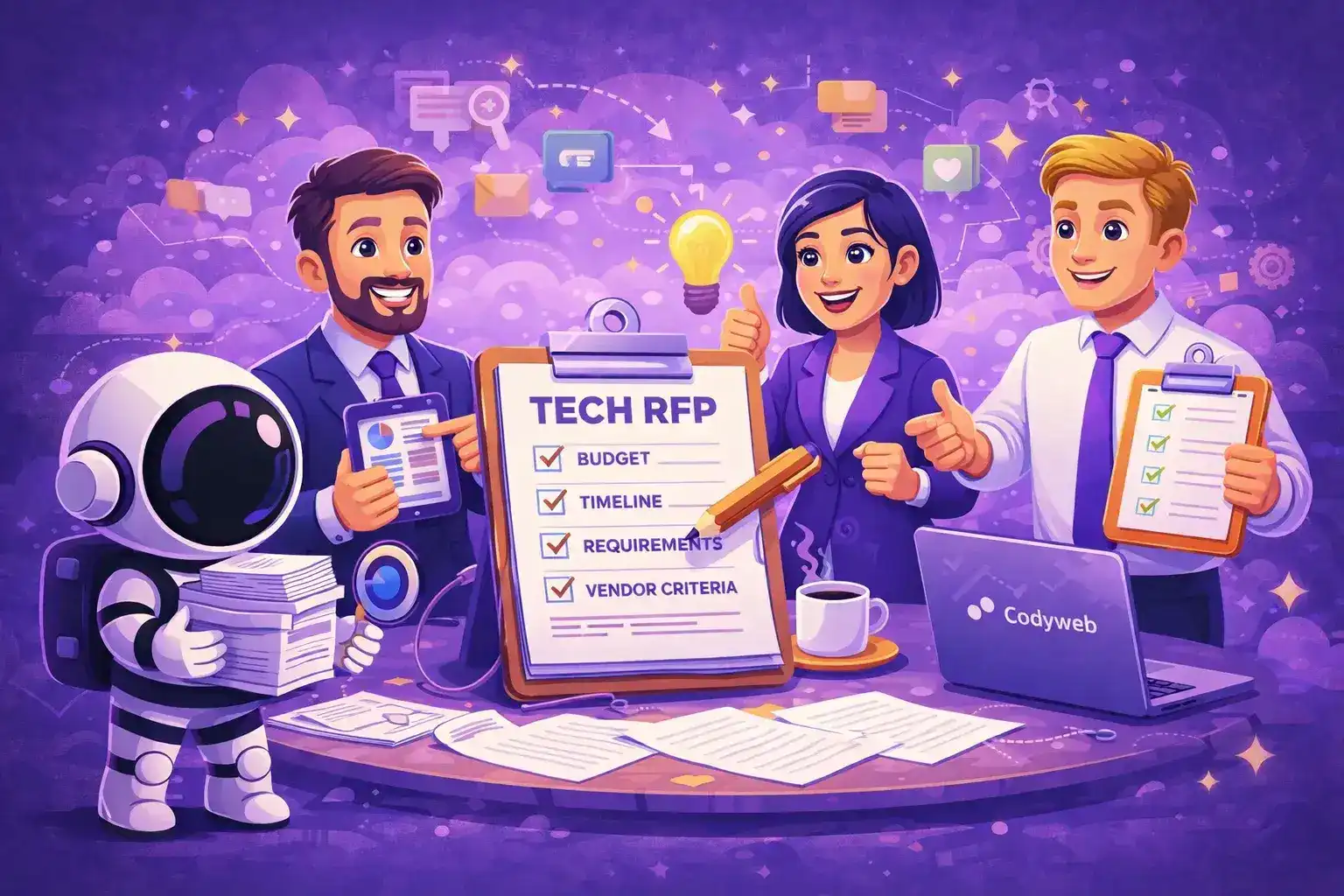
An effective RFP is a structured document that guides agencies through your requirements and gives them everything they need to submit a complete, relevant proposal. Its content varies from one project to another, but a solid RFP generally includes the ten sections summarized in the table below.
| Section | What to include |
|---|---|
| Executive summary | A short overview of the project, its purpose and the expected outcome. |
| Company background | Your organization, its market position and its current technology stack, so agencies can anticipate integration challenges. |
| Goals and objectives | The business problems to solve and the measurable impact expected on ROI, lead generation or time-to-market. |
| Scope of work and requirements | Functional and non-functional requirements, user stories and integration points, with must-have and nice-to-have features. |
| Technical requirements | Existing infrastructure, APIs, security, scalability, data migration and accessibility targets. |
| Deliverables | Documentation, code repositories, design files, training materials and intellectual property ownership. |
| Timeline and milestones | Desired start date, key milestones and target completion date. |
| Budget considerations | A realistic budget range and the expected level of cost breakdown, including TCO. |
| Submission requirements | Proposal format, required content (team, references, method), deadline, contact person and Q&A process. |
| Evaluation criteria | How proposals will be scored: experience, quality of the solution, team, cost and method. |
Regulatory constraints deserve their own line in the technical requirements. If the platform must meet an accessibility target such as WCAG 2.2 level AA, or process personal data under privacy laws, say so explicitly, because these requirements shape the design and the architecture. Our team covers these topics through its GDPR and accessibility compliance expertise.
The right document balances detail and flexibility. Provide enough information for agencies to understand the project fully, but leave room for them to propose solutions you may not have considered, and avoid prescribing a technical solution if you are open to alternatives. A well-crafted RFP reduces ambiguity, simplifies the evaluation and lays the foundation for a productive agency partnership.
Post-RFP engagement: from selection to kickoff
Sending the RFP is only one step of the vendor selection process. What follows determines whether you secure the right partner and start the project on solid ground, so decision-makers need a clear sequence for evaluating proposals and engaging with the shortlisted agencies.
- Score every proposal. After the deadline, review all proposals against your stated criteria with a scoring matrix, looking at the agency's understanding of your business goals as much as at its technical solution.
- Shortlist two to four agencies. Invite them to present their proposal, demonstrate prototypes if relevant and answer specific questions, which lets you observe team dynamics directly.
- Answer follow-up questions carefully. Agencies will ask for clarifications. Provide the information without expanding the scope by accident.
- Negotiate the contract. Pay close attention to intellectual property, payment schedules, service level agreements, data security and termination clauses, and have the contract reviewed by legal counsel.
- Run a structured kickoff. Bring together the key stakeholders on both sides to restate the goals, review the final scope, set communication rules and confirm roles in writing.
A well-managed post-RFP process ensures a smooth transition into execution and sets a collaborative tone from the first week. This care, from drafting the RFP to the kickoff meeting, is what allows a technology investment to deliver its expected ROI, lead generation and time-to-market objectives while keeping the TCO under control.
If your project involves business software, a client portal or an intranet, you can also review our custom web solutions before sending your RFP, to check whether the scope you describe matches what we build.
- vote(s)