
Key takeaways
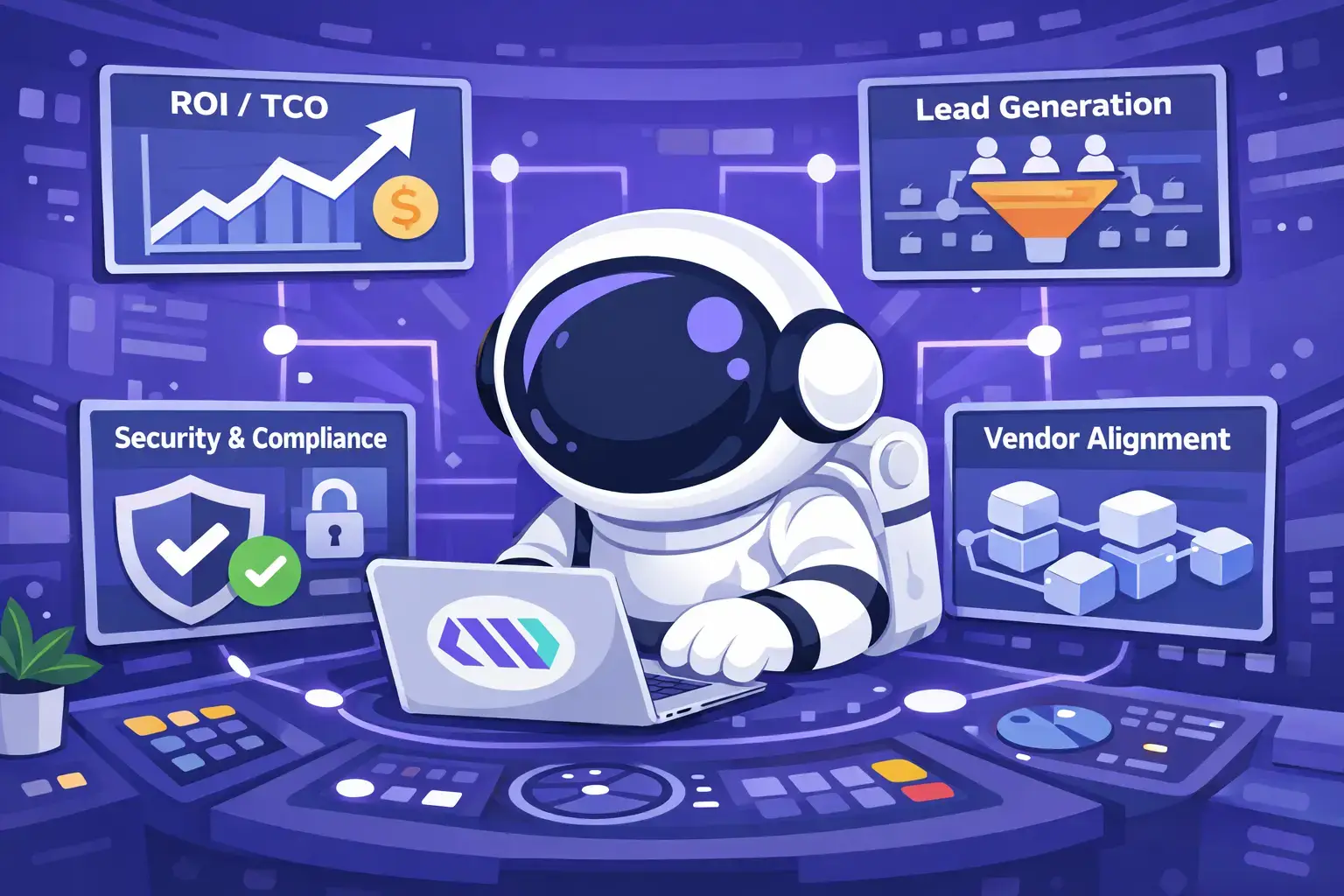
- Disconnected tools create data silos, manual re-entry and overlapping subscriptions that steadily erode ROI.
- An integrated tech ecosystem built around shared data and internal APIs removes fragile middleware and lowers total cost of ownership.
- A single technology partner gives you one point of accountability for performance, security and compliance.
The strategic imperative of tech partnerships for enterprise growth
For US decision-makers, whether a CTO evaluating infrastructure, a CMO driving acquisition or a founder watching the burn rate, technology investments have moved from operating overhead to strategic assets. Leadership is expected to show a predictable return on investment (ROI) for every software initiative. The challenge is no longer simply acquiring functional software but building an interconnected digital environment that scales without draining capital or creating new liabilities. Approaching this with a transactional vendor mindset often leads to inflated budgets and misaligned objectives, which is why growth calls for a genuine technology partnership.
A collection of disconnected off-the-shelf tools inevitably creates data silos and operational drag. When departments rely on separate platforms, information has to be transferred by hand, error rates rise and cross-functional visibility disappears. A custom tech ecosystem addresses this by connecting proprietary web applications, databases and third-party services so that they communicate natively. This alignment removes the structural bottlenecks that slow down growing organizations and makes the digital foundation an asset for revenue targets rather than an obstacle.
Working with a specialized development partner shifts the focus from writing code to solving business problems. The partner reviews your existing workflows, identifies the points of friction and designs custom business software, portals and intranets aligned with your objectives. Consider a growing B2B company paying for overlapping SaaS subscriptions that do not share data reliably. By moving to a consolidated internal platform maintained by a dedicated partner, it removes redundant license fees, automates data transfers and regains control over its intellectual property.
Removing hidden costs to optimize total cost of ownership
The sticker price of standalone commercial software is often misleading. For enterprise applications, the license fee represents only part of the financial burden, while maintenance, forced upgrade cycles and the engineering required to make incompatible systems communicate steadily increase the total cost of ownership (TCO). A custom ecosystem addresses these costs by making interoperability a design principle from the first line of code. When your CRM, ERP and operational portals share a unified data architecture, expensive and brittle middleware is no longer necessary.
The table below summarizes the difference between a fragmented stack and an integrated ecosystem on the main cost drivers.
| Cost driver | Fragmented stack | Integrated ecosystem |
|---|---|---|
| Data transfer | Ad hoc connectors and manual exports | Shared database and documented internal APIs |
| Vendor updates | Integrations that break after an update | Changes planned on a codebase you control |
| Support | One ticket queue per vendor | One team accountable for the whole platform |
| Licenses | Overlapping subscriptions, often billed per seat | Infrastructure costs tied to actual usage |
The mechanics of this saving are pragmatic. In a fragmented environment, IT departments spend a large share of their budget on custom connectors that simply keep data flowing between departments. These integrations frequently break during routine vendor updates, which causes downtime and emergency interventions. A custom build standardizes data pathways through centralized databases and internal APIs, so information moves securely across the organization and transcription errors disappear. The principles behind this design are detailed in our article on API-first architecture for enterprise tech.
An integrated partnership also consolidates support and maintenance. Handling tickets across many software vendors is an administrative burden that drains internal IT resources, whereas a single development partner provides one point of accountability for the core web infrastructure. During an outage, your team relies on the engineers who built the system rather than navigating conflicting vendor support tiers, which shortens resolution times and frees internal staff for revenue-driving projects. Continuous proactive web maintenance keeps this foundation fast and secure after launch.
Accelerating time-to-market with a unified digital foundation
Speed is a decisive advantage in the B2B sector. The ability to deploy new features, launch campaigns and open customer portals faster than competitors directly affects market share. A fragmented legacy stack works against this agility: when product teams must rework backend logic for a simple feature, or when marketing spends weeks gathering data for a launch, time-to-market stalls. A custom, integrated ecosystem is designed to make rapid deployment the norm.
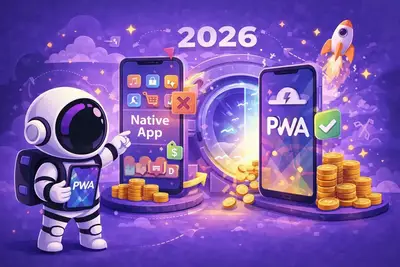
This acceleration comes from modular architecture and standardized development practices. A development partner builds your applications with reusable components and well-documented code, so new projects start from a stable, tested foundation instead of reinventing core functions. When a new market need appears, a modular architecture allows developers to create a new service module, connect it to existing billing and authentication systems and deploy it securely in a short time. When that service must also reach mobile users, a progressive web app instead of a native mobile app delivers it on every device from the same codebase.
This agility extends to marketing and sales execution. When behavioral data flows directly from a custom web portal into your marketing automation tool, CMOs can launch targeted campaigns without asking IT for manual data pulls. Picture an enterprise opening a new partner portal: because the backend was connected to the existing CRM during development, the marketing team can trigger automated onboarding sequences as soon as the portal goes live. Removing this friction protects the return on development investments.
Building your tech stack for faster lead generation
In the end, leadership judges technology investments by their contribution to growth. A custom platform can be designed to support lead generation and shorten the sales cycle. When marketing and sales tools operate in silos, valuable prospects fall through the cracks, because inaccurate lead scoring, delayed follow-ups and fragmented customer histories all reduce conversion rates. An integrated ecosystem aligns these departments around a single, current view of each prospect's journey.
Fast, relevant sales follow-up depends on data integrity. A custom web application can validate data captured from forms, client interactions and platform usage, then route it to the right sales representative with its full context. Sales teams can then replace generic pitches with outreach based on actual behavior, and contact a prospect when intent is highest. This precision lowers the customer acquisition cost and shortens the time needed to close complex B2B deals.
A unified ecosystem also gives founders and marketing directors closed-loop analytics. You can follow a prospect from the first anonymous visit through lead nurturing to the signed contract, which allows you to estimate customer lifetime value (CLV) and identify the channels and features that generate the best pipeline. At this point, the platform is no longer only an operational tool but a source of predictable revenue. When subscription fees for these tools rise with every new user, the question of custom software versus off-the-shelf SaaS deserves a precise ROI calculation.
Mitigating security risks and ensuring regulatory compliance
Protecting corporate data and keeping systems stable are basic requirements for any enterprise. A fragmented stack is inherently more exposed, because every third-party plugin and every poorly maintained API connection is a potential entry point for attackers. A single breach can lead to significant financial penalties and lasting reputational damage. A custom ecosystem reduces these risks by building security controls into the architecture rather than adding them afterwards.
Consolidating critical processes within a unified framework reduces the organization's attack surface. Your development partner can apply the same encryption, access controls and multi-factor authentication across the entire application, instead of relying on a dozen vendors to maintain adequate security on their side. Vulnerability scanning and patching can be managed centrally, so core applications stay protected against new threats without constant manual oversight from internal teams.
Compliance follows the same logic. Companies that handle health data must apply the safeguards required by HIPAA, those that process personal information of California residents must honor the rights granted by the CCPA, and enterprise buyers frequently ask their suppliers for a SOC 2 report issued by an independent CPA firm. A custom application can build data governance into its business logic from the start: automated retention policies, role-based permissions and audit logs designed for your industry. This preparation makes audits less disruptive and turns compliance into an argument in enterprise sales.
Securing your digital future through strategic vendor alignment
Overhauling your digital infrastructure is a long-term commitment. Building a custom tech ecosystem is not a simple software purchase but the start of a partnership designed to protect capital and support expansion. For CTOs, CMOs and founders, continuing to tolerate the inefficiencies, security gaps and data silos of disconnected tools is a direct threat to competitiveness. Sustainable growth requires a platform that follows your business rules rather than one that forces your operations into a generic template.
A technology partner also plans for scalability. As your company wins customers, enters new markets or launches new product lines, a well-designed architecture absorbs the additional load, which spares you the cost of replacing core software every few years. When poorly structured cloud applications scale, by contrast, infrastructure bills tend to grow faster than revenue.
Aligning with the right partner lets your executive team concentrate on market development and innovation. Entrusting the architecture, security and integration of your ecosystem to a specialized custom development team gives you a platform that lowers structural costs, supports revenue and provides a stable foundation for your most ambitious objectives.
- vote(s)